Life Unlocked
About Wellbeing, Live A Healthy Lifestyle
The Psychology of Motor-Movement in Sport
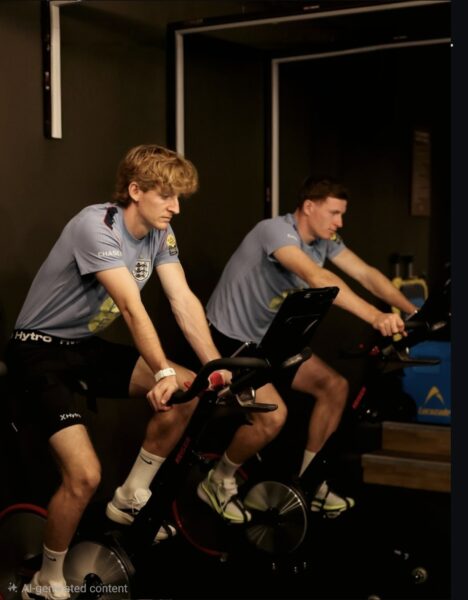
I’m a keen advocate when it comes to one’s motor senses and agility. We talk about strength, volume, endurance, technique, and load management. Yet, one influential factor often remains in the background: rhythm.
Rhythm is not just about music.
It involves movement, nervous system function, the timing of force production, and the ability to repeatedly execute a high-quality performance.
Research shows that rhythmic auditory stimuli can support motor learning, movement control, and attention. The question is not whether music makes training more enjoyable, but rather how rhythm can be utilised as a purposeful coaching tool.
I have observed that when rhythm is intentionally incorporated into training, something interesting happens.
The athlete no longer focuses solely on the intensity of the movement, but on *when* the movement occurs.
That is precisely where high-quality results are born.
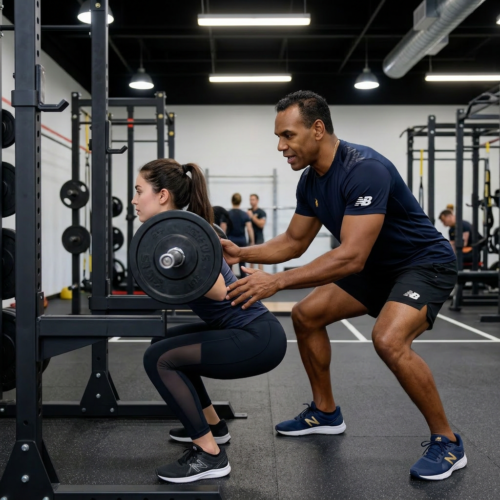
From a coach’s perspective, rhythm offers a way to guide training so that it supports both movement quality and optimal neuromechanical loading. When timing, intensity, and movement control align, the effectiveness of the training increases.
I believe that the competitive edge in future coaching will not be built simply by adding more load.
It will be built by better understanding how the nervous system learns, how movement is organised, and how rhythm guides this process.
That is why I maintain that rhythm is not merely background music for training. It is one of the most underutilised coaching tools for work ability.
Training variables:
✅ Nervous system (reaction speed, speed-strength): faster signal-to-movement connection for changes of direction and explosive starts.
✅ Musculotendinous elasticity: more economical movement, management of unnecessary tension, and more efficient force production.
✅ Core control: enables changes of direction without losing balance and improves stability across various body positions.
✅ Movement and stride rhythm control: supports one-on-one situations and facilitates rhythm changes.
✅ Aerobic and anaerobic efficiency: utilising micro-breaks and rhythm variations during play improves energy utilisation.
Intensity Versus Volume: High-Intensity Activity Shows Particular Promise
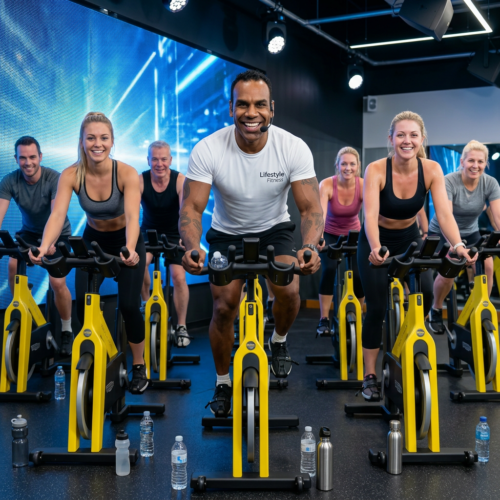
For practical translation: moderate-intensity activities include brisk walking, recreational cycling, and light resistance training, whilst vigorous-intensity activities encompass running, high-intensity interval training, competitive sports, and heavy weightlifting. Current guidelines recommend 150–300 weekly minutes of moderate activity or 75–150 minutes of vigorous activity, but substantial additional benefits accrue at two to four times these levels, with 300–599 weekly minutes of moderate activity or 150–299 minutes of vigorous activity associated with 26–42% mortality risk reduction.
Exercise Variety Matters: 19% Lower Mortality Through Diversity
The physiological rationale appears straightforward: different activities impose complementary metabolic and neuromuscular demands on the body (Schwendinger et al., 2025). Combining aerobic exercise (running, cycling, swimming) with resistance training (weightlifting, bodyweight exercises) and flexibility work (yoga, stretching) creates comprehensive adaptations that singular training modalities cannot replicate. Research confirms that individuals who perform both aerobic and resistance training achieve greater gains in cardiovascular health, muscle function, bone density, and metabolic efficiency than those who focus exclusively on one domain.
Press Image – Play Video


Healthy Food Guide

Health and Fitness